
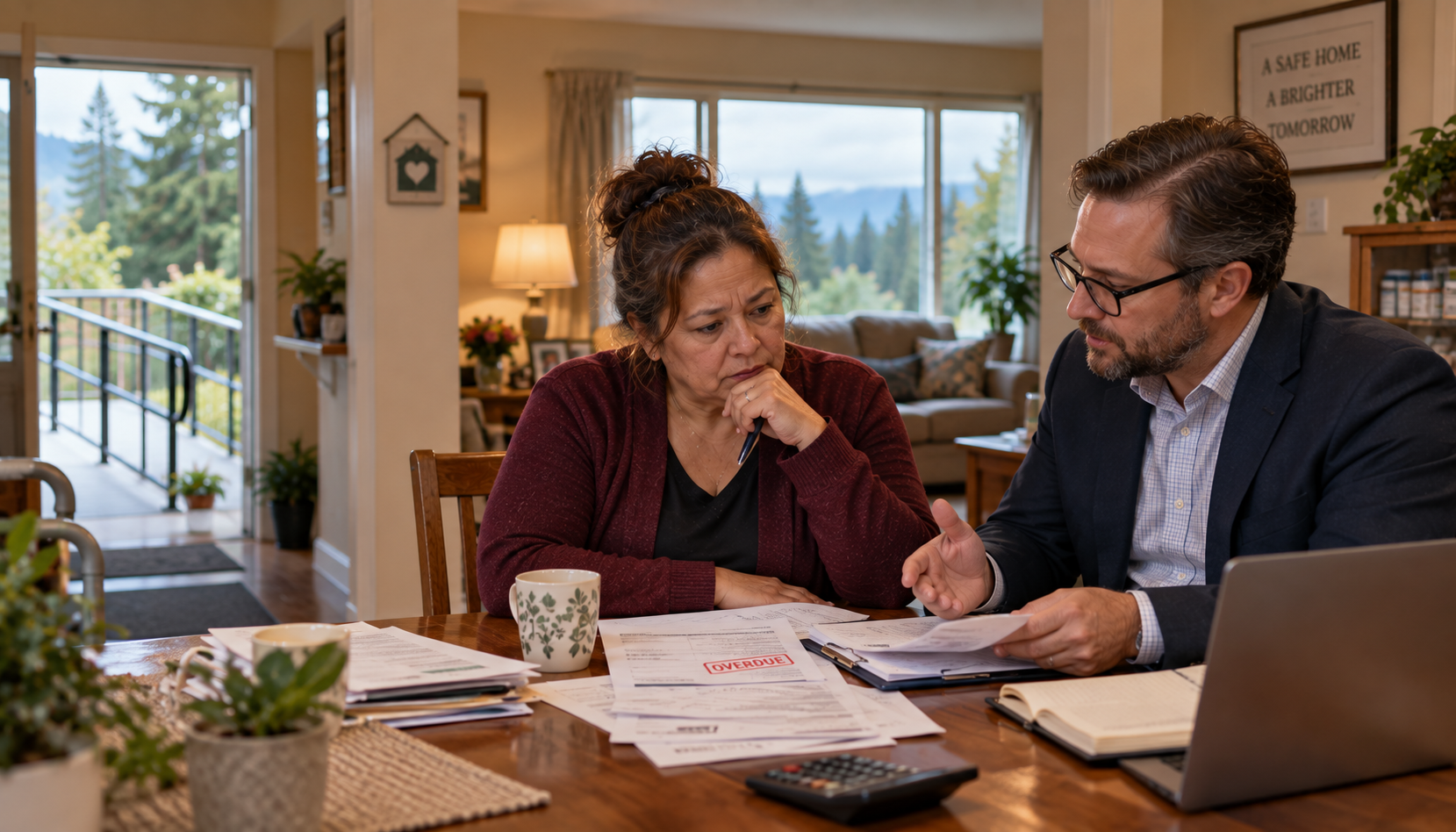
A Call for Fair Payment, Equal Legal Protection, and Legislative Reform.
By Nathaniel “Manny” Ballantyne
Director of Community Outreach, Washington Association of Adult Family Home Providers (WAAFHA)
WHEN RESIDENTS DO NOT PAY, PROVIDERS SHOULD NOT BE FORCED TO ABSORB THE LOSS
If Washington requires an Adult Family Home to continue providing care during a payment or discharge dispute, Washington must guarantee that the provider is paid.
A Serious and Growing Financial Injustice
Adult Family Home providers care for some of Washington’s most vulnerable residents twenty-four hours a day, seven days a week. Providers supply housing, meals, supervision, personal care, medication assistance, transportation coordination, utilities, staffing, and emergency support.
Yet when a Medicaid resident refuses or fails to pay the required monthly participation often called the resident contribution the provider may continue delivering all these services without receiving full payment. The unpaid balance can grow into thousands or even tens of thousands of dollars.
That is fundamentally unfair.
The Law Permits Discharge, but the Process Can Leave Providers Unpaid
Washington law technically permits an Adult Family Home to transfer or discharge a resident who has failed to make the required payment. WAC 388-76-10615 and RCW 70.129.110 recognize nonpayment as a lawful basis for transfer or discharge.
But having a right on paper is not the same as having an effective remedy. Providers must comply with detailed notice, documentation, reasonable-accommodation, preparation, and transfer requirements. A resident may challenge the discharge, delaying the process while the provider continues supplying housing and care without receiving the resident’s contribution.
Resident protections matter, and WAAFHA supports due process. But due process must be fair to both sides.
The Legal Playing Field Is Unequal
Washington’s discharge rules require residents to be told that, subject to legislative appropriation, they may obtain a lawyer at public expense to respond to a transfer or discharge notice. WAC 388-76-10617 even directs residents to a long-term-care discharge-defense screening line.
Meanwhile, the provider who may already be owed thousands of dollars must pay privately for legal representation. Many Adult Family Homes are small, owner-operated businesses. They may have to represent themselves against experienced counsel or continue providing uncompensated care because they cannot afford the legal cost of enforcing a right the law supposedly gives them.
A system that funds legal representation for one side but offers none to the other is not balanced. Protecting a resident’s rights should never require the government to disregard the provider’s rights.
Providers Cannot Operate Without Payment
An Adult Family Home cannot tell its caregivers, mortgage company, utility providers, grocery store, insurer, or suppliers that payment must wait because a resident has refused to pay.
Caregivers must still receive their wages. Food must still be purchased. Heat, electricity, water, licensing expenses, insurance, medical supplies, and transportation must still be paid. The resident continues receiving the full benefit of care, but the provider carries the entire financial loss.
One resident’s prolonged nonpayment can threaten payroll, destabilize the home, and reduce the provider’s ability to care for every resident living there. The government cannot demand uninterrupted care while ignoring uninterrupted payment.
Washington Should Guarantee Payment During a Discharge Dispute
If the state requires a provider to continue housing and caring for a resident while a discharge is challenged or delayed, the state should guarantee payment during that period. Washington should enact legislation requiring DSHS or the appropriate state agency to:
- Pay the provider any required resident contribution that remains unpaid after 30 days.
- Continue paying the full authorized amount while a discharge appeal, relocation effort, administrative review, or court proceeding is pending.
- Reimburse providers for verified unpaid contributions left behind when a resident dies, moves, or is transferred without paying the balance.
- Seek recovery directly from the resident, representative, guardian, estate, or other legally responsible party when appropriate.
- Establish a state compensation fund for unpaid Adult Family Home resident contributions.
- Award reasonable attorney fees when a provider successfully proves that a discharge was based on material and continuing nonpayment.
- Give providers access to legal assistance comparable to the publicly funded representation offered to residents.
This approach would protect residents from sudden or improper displacement without forcing one individual Adult Family Home to finance the state’s resident-protection system.
Protecting Residents Should Not Mean Punishing Providers
Resident rights and provider rights are not mutually exclusive. Washington can protect vulnerable residents while ensuring that providers are paid fairly. If the state delays or prevents a lawful discharge because additional time is needed to protect or relocate the resident, the public not one individual Adult Family Home should bear the resulting cost. The provider did not create the resident’s financial problem and should not be forced to subsidize care indefinitely.
A system that requires services without guaranteeing payment is not sustainable public policy.
It Is Time for Providers to Lawyer Up
Adult Family Home providers must stop facing these disputes alone. Providers need organized legal representation from the moment nonpayment begins—not only after thousands of dollars have accumulated.
WAAFHA should establish a statewide provider legal-defense program capable of:
- Reviewing admission agreements and payment provisions.
- Sending formal notices when resident contributions become delinquent.
- Ensuring transfer and discharge notices comply with every legal requirement.
- Representing providers during administrative appeals and court proceedings.
- Pursuing unpaid balances from residents, representatives, guardians, or estates when permitted by law.
- Challenging unreasonable government delays that force providers to deliver uncompensated care.
- Advocating for statewide legislative and regulatory reform.
A Clear Message to Washington Lawmakers
Providers dedicate their homes, labor, savings, and lives to caring for Washington residents. They deserve protection too. If the state requires an Adult Family Home to continue providing care, the state must guarantee that the provider is paid. No provider should lose thousands of dollars because the government protects the resident’s right to remain while disregarding the provider’s right to be compensated.
It is time to protect providers. It is time to guarantee payment. And it is time for Adult Family Home providers to lawyer up.
Policy note: This article is an advocacy statement and not legal advice. Individual providers should consult qualified counsel before issuing a transfer or discharge notice or beginning a collection action.